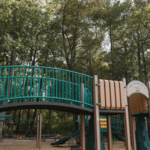
In a learning-with-nature approach, the natural world is not simply the setting for activities. It is an active participant in the learning process. Weather, seasons, materials, terrain, and living systems shape the curriculum, invite inquiry, and influence how children move, think, and relate to one another.


In a learning-with-nature approach, the natural world is not simply the setting for activities. It is an active participant in the learning process. Weather, seasons, materials, terrain, and living systems shape the curriculum, invite inquiry, and influence how children move, think, and relate to one another.
What Does It Mean to Learn With Nature at SHED?
While Forest K is the program most directly shaped by a learning-with-nature approach, this philosophy extends across SHED as a whole. Learning with nature is not confined to a single classroom or age group. It is woven into the daily experiences of children throughout the campus.
Nature consistently drives curiosity at SHED. Questions emerge from what children notice, encounter, and experience in real time. The SHED Children’s Campus is intentionally designed to provide children with safe, meaningful access to woods, streams, trees, changing weather, and the living systems that surround them. Critters, bugs, mud, water, wind, and seasonal shifts are not interruptions to learning. They are invitations into it.
Across programs, educators observe closely and respond to what the natural world presents. Children investigate, revisit ideas, collaborate, and build understanding through direct relationship with their environment. This shared philosophy allows learning with nature to show up differently by age and development, while remaining consistent in its values.
Forest K represents the fullest expression of this approach, but the roots run through every program. Nature is a teacher at SHED, shaping curiosity, deepening inquiry, and grounding learning in lived experience.
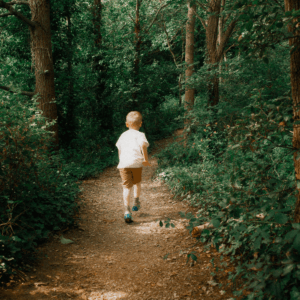

The Environment as a Teacher
In Reggio-inspired education, the environment is often called the third teacher.
When learning happens with nature, the environment does important work:
- It slows children down and invites attention
- It presents real challenges that require problem solving
- It offers complexity rather than simplification
- It responds honestly to children’s actions
A muddy path cannot be controlled. A cold morning cannot be ignored. A structure made of sticks either holds or it does not. These experiences give children immediate feedback and invite reflection, resilience, and adaptability.
The environment teaches alongside the educator.
Emergent Curriculum, Shaped by Nature
Learning with nature relies on emergent curriculum.
Rather than delivering predetermined lessons, educators observe patterns of interest and respond intentionally. If children are fascinated by ice, learning might move toward freezing and thawing, texture, temperature, measurement, or storytelling. If wind becomes the focus, children might explore movement, sound, balance, or shelter.
Nature offers continuity and change. Children revisit ideas across days and seasons, deepening understanding rather than rushing toward completion.
This kind of learning honors curiosity as a driving force.
Movement, Risk, and Body Awareness
Learning with nature also means trusting children’s bodies.
Natural environments invite climbing, balancing, lifting, carrying, jumping, and navigating uneven terrain. These movements are not added as physical education. They are woven into daily experience.
Through repeated interaction with real conditions, children develop body awareness, coordination, and confidence. They learn how to assess risk, adjust movement, and care for themselves and one another.
Rather than removing challenge, learning with nature supports children in meeting it thoughtfully.
Learn more about the physical benefits of playing outdoors.
Relationship, Responsibility, and Stewardship
When children learn with nature, they form meaningful relationships with place.
They notice seasonal changes, observe living systems, and come to understand what plants, animals, and ecosystems need to thrive. Through daily interaction, children see how their actions affect the world around them and begin to understand their role within it.
Care grows naturally from connection. Rather than being taught conservation as a concept, children experience it as a lived responsibility. They learn to tend, protect, and respect the environment because it matters to them, because they belong to it.
In this way, children are not only learners. They are emerging stewards of our shared future. Conservation is not framed as obligation, but as relationship. Belonging extends beyond the classroom and into the world they will one day lead.
Learning with nature supports more than academic readiness. It supports:
- Whole body development
- Emotional regulation and resilience
- Problem solving and collaboration
- A sense of agency and belonging
- Long term relationship with the natural world
Curious About a Nature-Based Kindergarten?
Forest K offers an alternative approach to Kindergarten, one rooted in learning with nature.
For families seeking a Kindergarten experience that nurtures the whole child, builds confidence and independence, and fosters a lifelong relationship with the natural world, Forest K offers a thoughtful, developmentally responsive path forward.
Explore Forest K and see if a nature-based Kindergarten is right for your child.