
How Space Shapes Learning
At SHED, learning begins with curiosity, connection, and environment.
Guided by the Reggio Emilia approach, SHED views the learning environment as an active participant in children’s development. Alongside educators and peers, space itself supports how children explore ideas, regulate emotions, collaborate, and express creativity.
Research in child development and neuroscience reinforces this philosophy. The spaces children inhabit influence stress levels, attention, memory, and the ability to engage deeply in learning. Every SHED classroom and outdoor space is intentionally designed with this understanding in mind.
The Environment as a Teacher
In Reggio Emilia–inspired education, the environment is often referred to as the “third teacher,” a concept introduced by educator Loris Malaguzzi. This reflects the belief that space communicates values, supports relationships, and invites exploration without relying solely on adult instruction.
A thoughtfully designed environment:
- Encourages independence and agency
- Supports collaboration and dialogue
- Invites inquiry and exploration
- Fosters calm, focus, and belonging
- Evolves in response to children’s interests
At SHED, environments are not decorative or static. They are intentional, responsive, and deeply connected to how children learn.
Why Environment Matters
Child development and environmental psychology research consistently shows that learning is strongest when children feel safe, regulated, and engaged.
Well-designed learning environments have been shown to:
- Lower stress and support emotional regulation
- Improve attention and cognitive performance
- Strengthen executive function and problem-solving skills
- Support creativity, flexibility, and persistence
These findings guide how learning spaces at SHED are designed, organized, and cared for each day.
Inside SHED Learning Environments
What This Looks Like in Practice

Indoor Classrooms: Calm, light-filled spaces
Natural light, neutral tones, and uncluttered layouts create calm, predictable classrooms. These spaces support emotional regulation, focus, and meaningful collaboration.
Why This Matters
When stress levels are lower, children can concentrate, engage with others, and explore ideas more deeply.

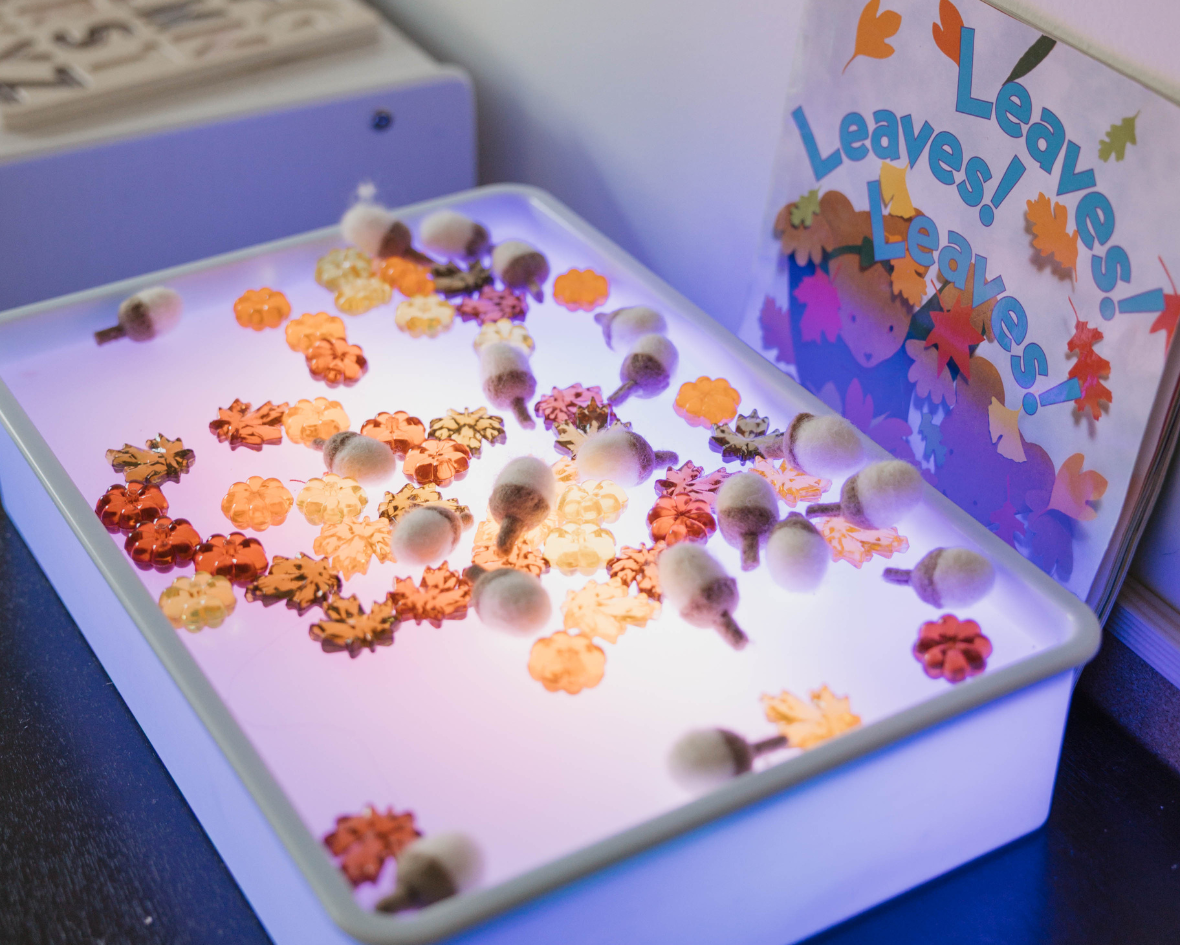
Materials and Learning Studios: Open-ended materials for deeper thinking
Materials are accessible, intentional, and open-ended, allowing children to explore and use them in many ways.
Why This Matters
Open-ended materials encourage problem-solving, flexible thinking, independence, and persistence.

The Atelier: Creativity as a way of thinking
The atelier is a space for exploration, experimentation, and expression. Creativity is treated as a way of thinking rather than a separate activity.
Why This Matters
Creative expression supports cognitive development, emotional processing, and confidence.


Learning Made Visible: Documentation of thinking
Children’s work is displayed as documentation of learning, highlighting process, reflection, and growth.
Why This Matters
Seeing their ideas valued builds confidence, supports reflection, and strengthens a sense of belonging.
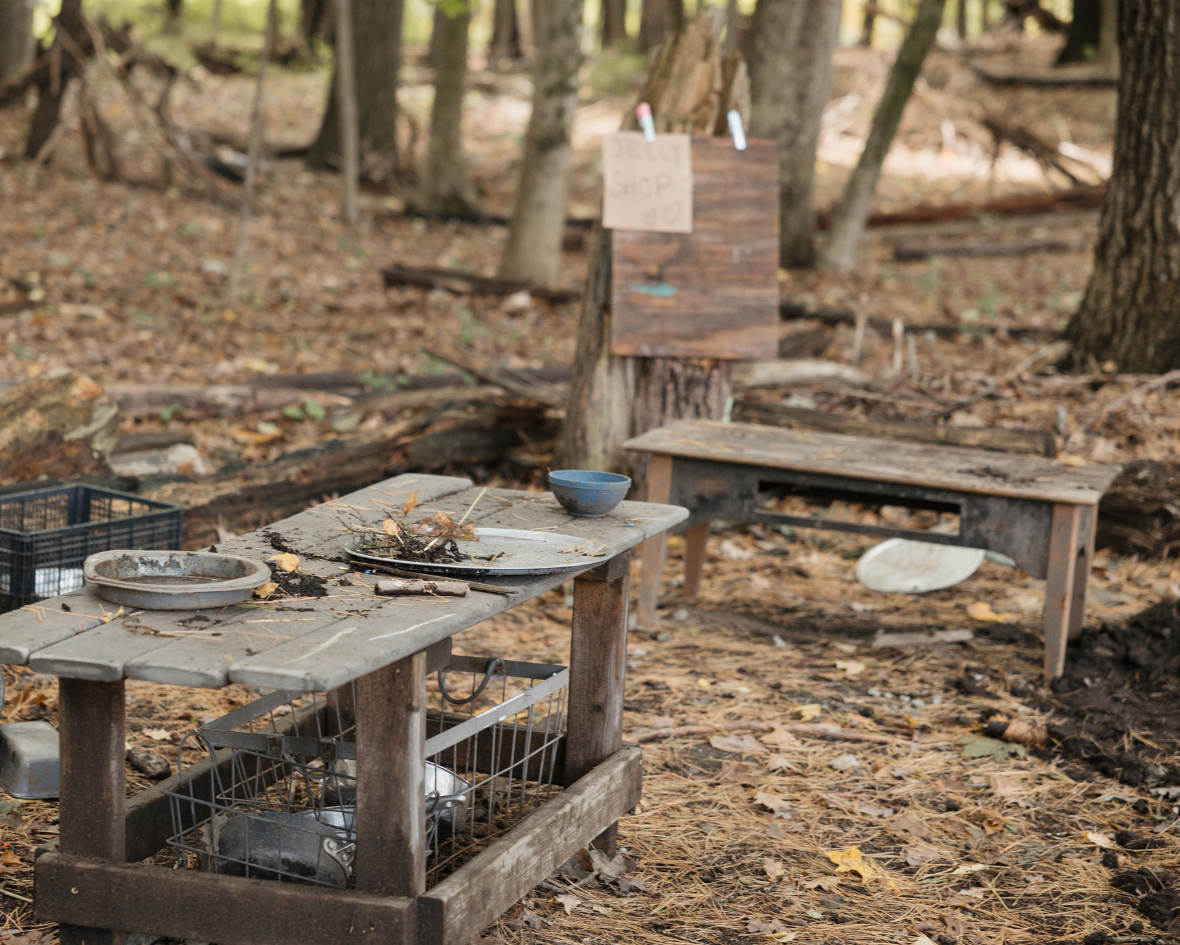

Outdoor Learning Environments: Learning beyond four walls
Outdoor classrooms and shared spaces extend learning into nature, supporting movement, inquiry, and collaboration.
Why This Matters
Time spent outdoors reduces stress and supports attention, creativity, and problem-solving.

Forest-Based Learning Spaces: Nature as a learning partner
Forest-based spaces offer meaningful learning experiences rooted in exploration, connection, and the natural world.
Why This Matters
Nature-based learning supports executive function, resilience, emotional regulation, and confidence.

Caring for the Environment: Responsibility and belonging
Children participate in caring for plants, materials, and shared spaces as part of daily life.
Why This Matters
Caring for the environment builds responsibility, empathy, and a sense of agency.
Why This Matters at SHED
At SHED, the environment is intentionally designed to support how children grow, think, and learn.
Grounded in Reggio Emilia philosophy and supported by research, SHED learning spaces help children feel safe, capable, and inspired. The environment does not simply hold learning. It actively shapes it.
Research Citations Appendix
Reggio Emilia Philosophy & Environment as a Teacher
Reggio Emilia’s “Third Teacher” concept
- Strong-Wilson and Ellis (2007) discuss the concept of the environment as a third teacher, where children, teachers, and space all contribute to learning.
- A qualitative study exploring children’s perspectives found that environments in Reggio-inspired settings shape how children engage, explore, and communicate.
- The principle that well-designed spaces enable exploration, communication, and relationships is foundational in Reggio Emilia documentation and interpretation.
- Wikipedia’s overview of the Reggio Emilia approach highlights the role of environment in supporting sustained relationships and meaning making.
Environment, Stress, Attention, & Cognitive Benefits
Green space and attention/stress
- Research shows exposure to green spaces is associated with benefits for attention restoration and reduced stress.
- A scoping review of green space effects indicates positive trends in attention and stress outcomes in children and youth.
Classroom Design & Classroom Climate
Impact of physical classroom design
- A 2025 study using experimental VR scenarios found that design factors like window area, plants, and color can affect stress, attention, mood, and restoration in classroom settings.
- Research on classroom climate shows that the learning environment influences children’s behavior and socio-emotional health.
Additional Educational Psychology Context
Documentation & open-ended learning principles
- NAEYC notes that the Reggio approach emphasizes flexible environments that support collaborative meaning-making between children and teachers.